S
Quartzite Countertops: What Homeowners Really Need to Know (From a Fabricator)
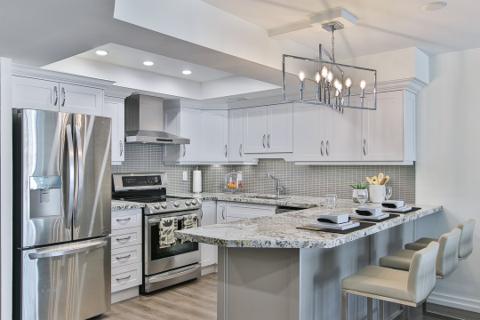
Quartzite countertops are everywhere right now—and for good reason. In high-end custom homes and upscale remodels, quartzite has become the material of choice for interior designers and homeowners who want a natural stone with dramatic movement, bold veining, and serious visual impact.
From soft whites and creamy neutrals to vivid colors with striking patterns, quartzite delivers a “wow” factor that few materials can match.
But beauty comes with responsibility. And before you drop $10,000–$15,000 on slabs, fabrication, and installation, there are some realities you need to understand—straight from the shop floor.
What Is Quartzite, really?
Quartzite is a natural stone, quarried directly from the earth. Blocks are literally blasted out of the ground with explosives, then sliced into slabs. That process alone should tell you something important:
No two slabs are the same.
Even slabs pulled from the same block can behave very differently once they’re cut, fabricated, and installed. Color, density, porosity, and brittleness can vary dramatically. That’s part of the charm—and part of the risk.
Quartzite Is Extremely Hard… and Still Brittle
One of the most common misconceptions about quartzite countertops is:
“It’s super hard, so it must be indestructible.”
Not quite.
Yes, quartzite is harder than granite. But hardness does not mean flexibility. Quartzite is brittle, which means it can chip more easily during fabrication and installation—especially on edges, corners, sink cutouts, and thin profiles.
This is why experienced fabrication matters. Quartzite is not forgiving. Cutting, handling, and installing it requires skill, patience, and the right process.
Staining: The Big One Homeowners Miss
Here’s the truth most sales brochures won’t tell you:
Many quartzites—especially white and light-colored slabs—are porous.
That means they can absorb:
Water
Skin oils
Cooking oils
Soap residue
Wine, coffee, and acidic liquids
If you’ve ever seen a quartzite countertop darken around the faucet, that’s not dirt—it’s moisture absorbing into the stone.
How Fabricators Manage Staining Risk
At a professional fabrication shop, white quartzites go through an extensive process:
Slabs are sealed front and back before cutting
Cutting is done with copious amounts of water (necessary, but risky)
After cutting, slabs must dry out completely
Cut edges are sealed
Pieces are sealed again after fabrication
Countertops are sealed once more after installation
Even after all that, some quartzites will still absorb moisture over time.
That’s not a failure—it’s the nature of the material.
Maintenance: Yes, Quartzite Requires It
If you choose quartzite, you are choosing a material that requires ongoing maintenance.
Here’s the reality:
Quartzite should be sealed at least twice per year
High-use areas (around sinks and faucets) may need more frequent sealing
If you see darkening, that’s your signal—it’s time to reseal
This isn’t optional. Maintenance is part of the deal.
If the idea of regular sealing feels like a chore, quartzite may not be the right countertop for your lifestyle.
When Quartzite Is the Right Choice
Quartzite is an excellent option if:
You want a natural stone with dramatic movement
You understand that variation is normal
You’re willing to perform basic maintenance
You value appearance over “set it and forget it” convenience
When Quartzite Is Not the Right Choice
Quartzite is probably not for you if:
You want zero maintenance
You expect every slab to behave the same
You don’t want to think about sealing
You prefer predictability over natural variation
If that sounds like you, engineered quartz may be a better fit. It offers consistent color, no sealing, and far less upkeep.
Final Thoughts from a Fabricator
Quartzite is stunning. There’s no question about it. When done right, it can be the showpiece of a kitchen or bath.
But it’s not bulletproofed. It’s not maintenance-free. And it’s not something you should choose without understanding what you’re signing up for.
A good fabricator will educate you before you buy—not after there’s a problem.
If you go into quartzite with clear expectations, you’ll love it for decades. If you expect it to behave like engineered stone, you’ll be frustrated.
Choose wisely. And seal it—twice a year.